Cloud
Video
CCC Board of Governors
Support
More
Calbright
Event Coverage
Register
Sign In
Media
Right to Know Hazardous Materials
Eye Safety
Welcome to English N60: Basics of Effective Writing
Histograms for Grouped Data.mp4
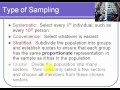
Sampling and Data
Sketching and Extrusion part 1 - Making a Pushstick
Introduction Video
Guided Pathways - Save the Retreat Date
13-3.2.7 Chebyshev's theorem and the empirical rule, Part 1
13-3.2.6 Approximating stand. dev. of a data set given a histogram
13-5.2.3 Probabilities involving two rolls of a die - decimal answers
13-5.1.6 Outcomes and event probability
13-4.2.3 Computing r and the coeff. of the least squares reg. line
13-4.2.3 and 4.2.4 Interpreting the slope and the equation of the least squares reg. line to make predictions
13-4.1.1 Linear relationship and the sample correlation coefficient
13-3.3.6 Box-and-whisker plots, Part 1
13-3.2.3 Sample standard deviation
13-3.2.2 Population standard deviation
13-3.2.5 Comparing standard deviations without calculation
13-3.1.9 Mean, median, and mode - comparisons
13-3.1.3 Weighted mean - tabular data
13-3.1.2 Rejecting unreasonable claims based on average statistics
13-3.1.8 Mean, median, and mode: computations
13-3.1.4 Comparing means without calculation
13-3.2.1 Using back-to-back stem-and-leaf displays to compare data sets
13-2.3.1 Interpreting a stem-and-leaf display
13-2.2.3 Interpreting relative frequency histograms
13-2.2.2 Frequency polygons for grouped data
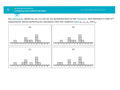
13-2.2.1 Histograms for grouped data
13-2.1.3 Interpreting a double bar graph
Previous
Next